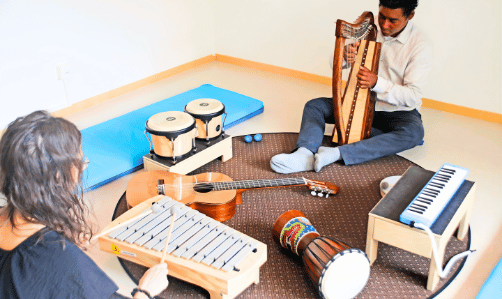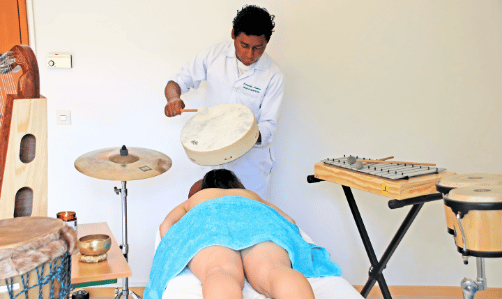
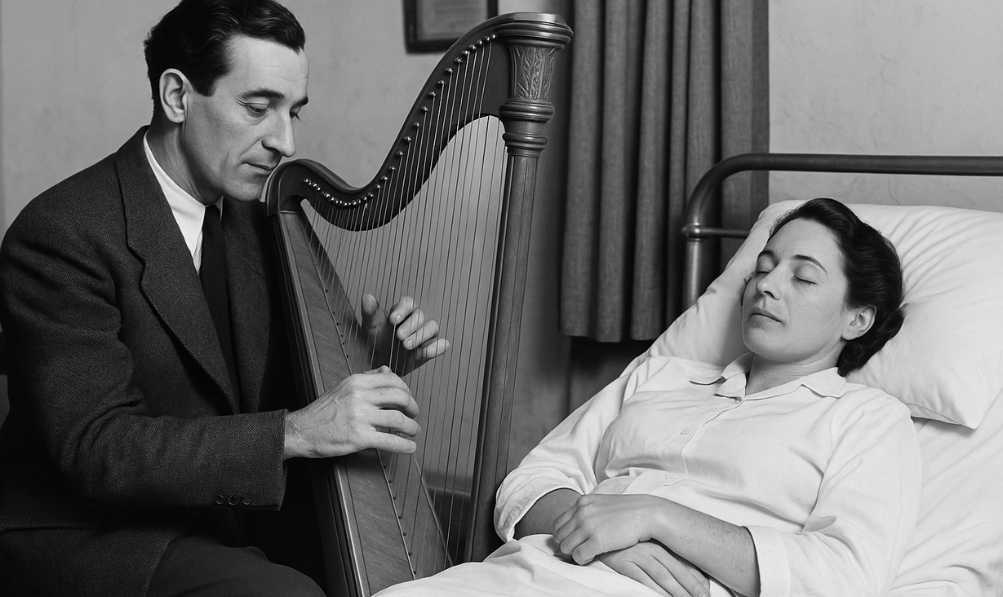
The use of music for healing purposes is not a recent development. More than 50,000 years ago, Homo sapiens already used music in healing rituals. From ancient China to Egypt, from India to classical Greece, historical texts reflect the belief that music possessed a fundamental power capable of either uplifting or deeply affecting the human soul. This connection was established because, after such “musical rituals,” ill individuals often regained their health.
Music Therapy in Ancient China
In ancient China, Emperor Shi Shun inspected his empire to ensure that the five tones of the Chinese musical scale were correctly tuned and used by the people in their folk songs. It was believed that the type of music produced in a city could shape the character of its inhabitants, making them more aggressive, peaceful, romantic, or inclined toward other traits.
In recent years, some music therapists and I have shared the slogan “Music therapy only with music therapists” on social media. I would like to clarify that this does not diminish the work of other professionals who use music in medical contexts, but rather emphasizes that safe and effective music therapy requires a trained professional who understands what they are doing.
After all, when we visit a dentist, we expect to be treated by a qualified professional, not by an assistant.
Music Therapy in Ancient Egypt
In ancient Egypt, singing played a central role. According to the teachings of Ani, singing was considered the nourishment of the gods and was present in the palaces of the pharaohs. There are indications that the physician Imhotep used music around 3000 BCE, as recorded in a papyrus, to enhance female fertility and support pregnancy.
In the Christian Bible, there are accounts of David playing the harp to calm King Saul and refresh his troubled spirit.
In ancient Greece, the philosopher Aristotle recognized that the cosmos was structured by intervallic relationships corresponding to specific behavioral and personality traits in individuals. He used music to treat people with psychological disturbances and believed that music not only had healing effects but also influenced moral behavior. Aristotle classified these effects into four types of “ethical music.”
King Alexander the Great also reportedly used the music of the lyre to restore his mental balance.
Music Therapy in the Middle Ages
During the Middle Ages, singing played a decisive role. Music was viewed as a force capable of either connecting humans with God or distancing them from Him. Saint Bernard of Clairvaux instructed monks to sing sweetly in order to move hearts and alleviate suffering and anger.
Some physicians of the time hired minstrels to play music for patients, aiming to accelerate their recovery.
Toward the end of the Middle Ages, the world’s first psychiatric hospital, founded in 1409, introduced music into the treatment of mental illnesses and tarantism.
Music Therapy in the Modern Era
In the modern era, particularly during the 19th century, the interaction between music and medicine intensified significantly. Music came to be regarded as a powerful stimulus for the body and human emotions. Organizations such as the “National Society for Musical Therapeutics” were founded, and nurses like Isa Maud Ilsen began using music to treat physical and mental illnesses.
The history of music therapy continues to evolve, and today degree programs in music therapy are offered at universities in many countries around the world.
In the contemporary period, the interaction between music and medicine experienced renewed growth beginning in the late 19th century. Music was understood as a potent stimulus for the body and emotional life. Institutions such as the “National Society for Musical Therapeutics,” founded in 1903, and pioneers like Isa Maud Ilsen played a key role in establishing music as a therapeutic resource for both physical and mental health.
The development of music therapy continues today, with academic training programs available in numerous countries.
Bibliographic Reference
ABNT
- DOS SANTOS, Ednaldo. A Brief History of Music Therapy. Ednaldo Music Therapy, December 5, 2025. Available at: https://ednaldomusiktherapie.de/en-us/en-blog/a-brief-history-of-music-therapy . Accessed on: December 4, 2025.
APA (7th edition)
- Dos Santos, E. (2025, December 5). A brief history of music therapy. Ednaldo Music Therapy. https://ednaldomusiktherapie.de/en-us/en-blog/a-brief-history-of-music-therapy
Vancouver
- Dos Santos E. A brief history of music therapy [Internet]. Ednaldo Music Therapy; 2025 Dec 05 [cited 2025 Dec 04]. Available from: https://ednaldomusiktherapie.de/en-us/en-blog/a-brief-history-of-music-therapy
Learn More About Music Therapy
If you are interested in music therapy or would like to know whether this work suits your needs, feel free to contact me.
Email: contact@ednaldomusictherapy.com
WhatsApp: +49 157 54239376